Before
•
LC workflow tested 2 fibers at a time
•
Repeated tests slowed high-count jobs
•
Failures were reviewed across many runs
Hardware UX Case Study
Fluke Networks's third generation optical loss test set, and the first tester in the world to test up to 24 fibers in one second for high-density fiber networks. CertiFiber Max was officially launched in January 2026.
View Launch Announcement →My Role
Owned the end-to-end design workflow for this module, from framing field requirements and mapping the test flow to designing core screens, validating interactions, and refining the final experience for launch.
Timeline
April 2024 - Jan 2026
Platform
Versiv Device UI
Methods
VOC Interviews, Usability Testing, A/B Validation
Collaboration
Firmware + Product Teams Across Time Zones
Overview
Data center fiber environments are becoming denser, and contractors need to certify complex multi-fiber systems quickly without losing confidence in setup accuracy or result quality.
CertiFiber Max introduced faster, more flexible testing inside the existing Versiv ecosystem. My UX challenge was to make a new module feel natural in a legacy device UI while helping technicians move through setup, testing, and result review with less friction.
The module can test up to 24 fibers with MPO connectors, including 8, 12, 16, 20, and 24 fiber configurations.
24
up to 24 fibers in one test
<1s
to measure each fiber (loss, length, polarity)
5
decision areas shaped for technician speed
My Contribution
Owned the device-screen workflows for setup, guided Set Reference, testing, and result review
Defined the Set Reference flow to guide technicians through device calibration before cable testing
Defined how failed results are reviewed, navigated, and understood on a compact hardware screen
Designed polarity and fiber-mapping visuals to make complex 24-fiber data easier to scan
Established clearer progress, count, and time indicators for the testing workflow
Drove design alignment with firmware and product teams through implementation
Who It’s For

Field Technician
Data center & contracting
CertiFiber Max was designed for field technicians certifying high-density fiber systems under constant time pressure in data center environments.
Speed
Many cables per day, minimal screen time
Clarity
Needs scannable results at a glance
Confidence
Must trust pass/fail without second-guessing
Field conditions
Bright, loud, and constantly moving
Workflow Shift
LC workflow tested 2 fibers at a time
Repeated tests slowed high-count jobs
Failures were reviewed across many runs
Fit MPO testing into the familiar Versiv workflow
Make 24-fiber results scannable at once
Help technicians find failures faster
Up to 24 fibers tested with MPO
Failure-first navigation
Progress, count, and time visibility
Design Decisions
Unlock private case study details
You are viewing the public preview for CertiFiber Max. Enter the shared password to continue.
ProblemA single certification pass could include many fibers, each with loss, margin, polarity, and length values.
DecisionI shaped the result review experience around one scannable view so technicians could compare the full result set without excessive screen hopping.
The workflow supported faster interpretation during high-volume testing.
Screen Locked
Unlock this section to view the design screen.
ProblemWhen technicians test many cables in a day, manually stepping through every passing result slows down the work.
DecisionI explored navigation patterns that helped users move directly through failed results and focus on the places that needed action.
The UI respected field time by making the most important results easier to reach.
Screen Locked
Unlock this section to view the design screen.
ProblemPolarity is technical and can be hard to interpret quickly when it is reduced to text-heavy result data.
DecisionI designed graphical polarity treatments that made the result easier to understand within the small hardware screen context.
Technicians got a clearer visual cue while staying inside the familiar Versiv framework.
Screen Locked
Unlock this section to view the design screen.
ProblemSet Reference requires technicians to gather multiple items before starting, including the right cables, connectors, and TRC setup parts.
DecisionI introduced a guided, graphic workflow for Set Reference and added color-coded fiber types based on fiber count, so technicians could pick the right cable path quickly without reading every label.
Technicians could configure and complete Set Reference faster, with clearer understanding of which fiber type to use at each step.
Screen Locked
Unlock this section to view the design screen.
ProblemTechnicians need to understand progress, not only pass/fail status, when testing strands across dense environments.
DecisionI added support for count and time visibility, plus a new Settings control where users can configure test-count and timer limits. This also helps teams see how long a reference remains valid and how many tests can be run with a single TRC.
The screen experience aligned more closely with how field teams measure momentum on the job.
Screen Locked
Unlock this section to view the design screen.
User Testing
Explored multiple screen concepts to test different ways of structuring fiber test data.
Used VOC feedback to understand technician mental models and information priorities.
Validated which concept made setup, polarity, and result data easier to interpret.
Refined the final direction based on user evidence, not internal preference.
Ran quick usability tests inside the IDC office to validate open interaction decisions.
Compared how users understood screen states, navigation, and failed-result review.
Used findings to reduce ambiguity and strengthen design rationale.
Aligned stakeholders around the clearest interaction direction for implementation.
BICSI 2026
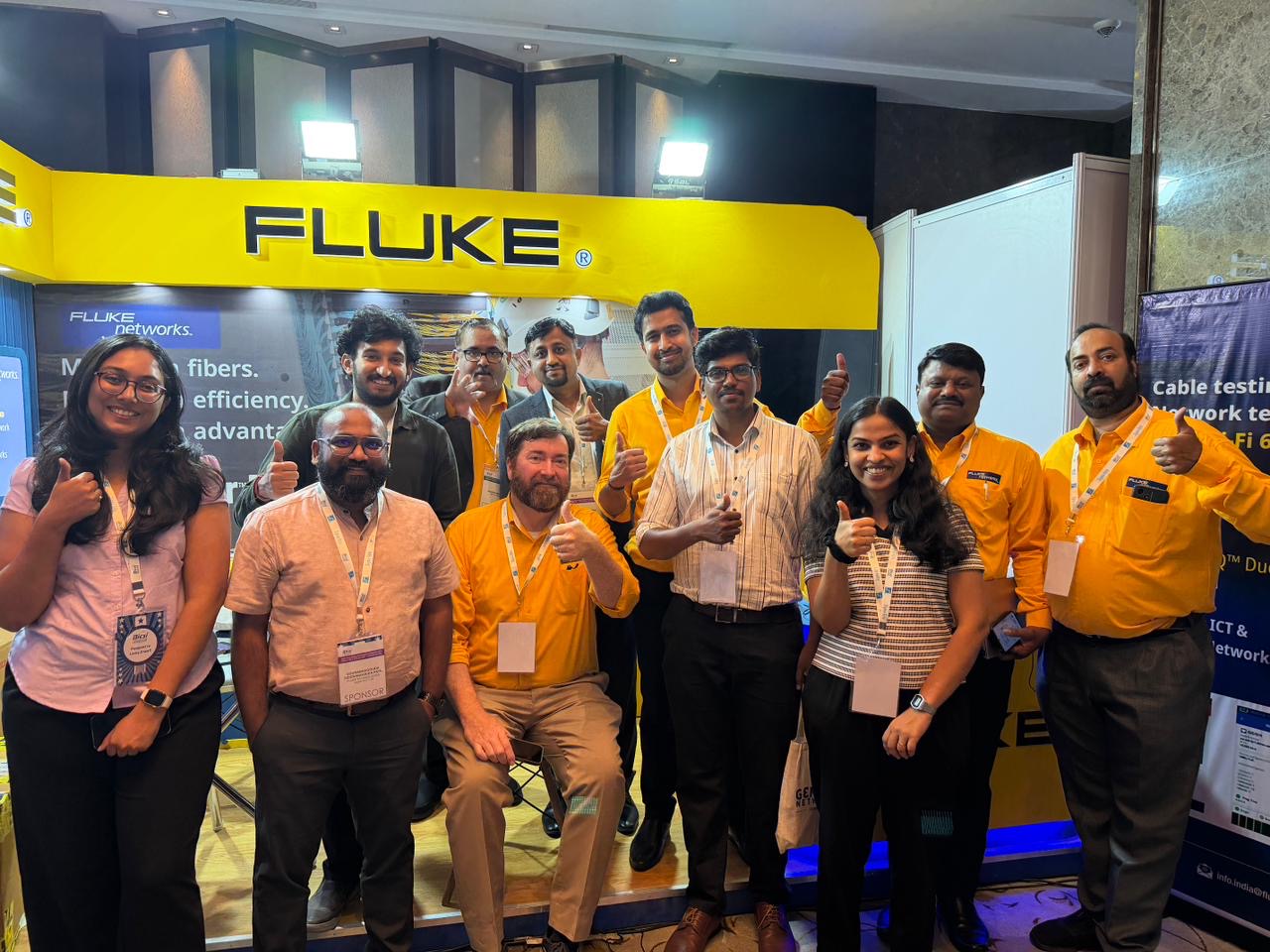
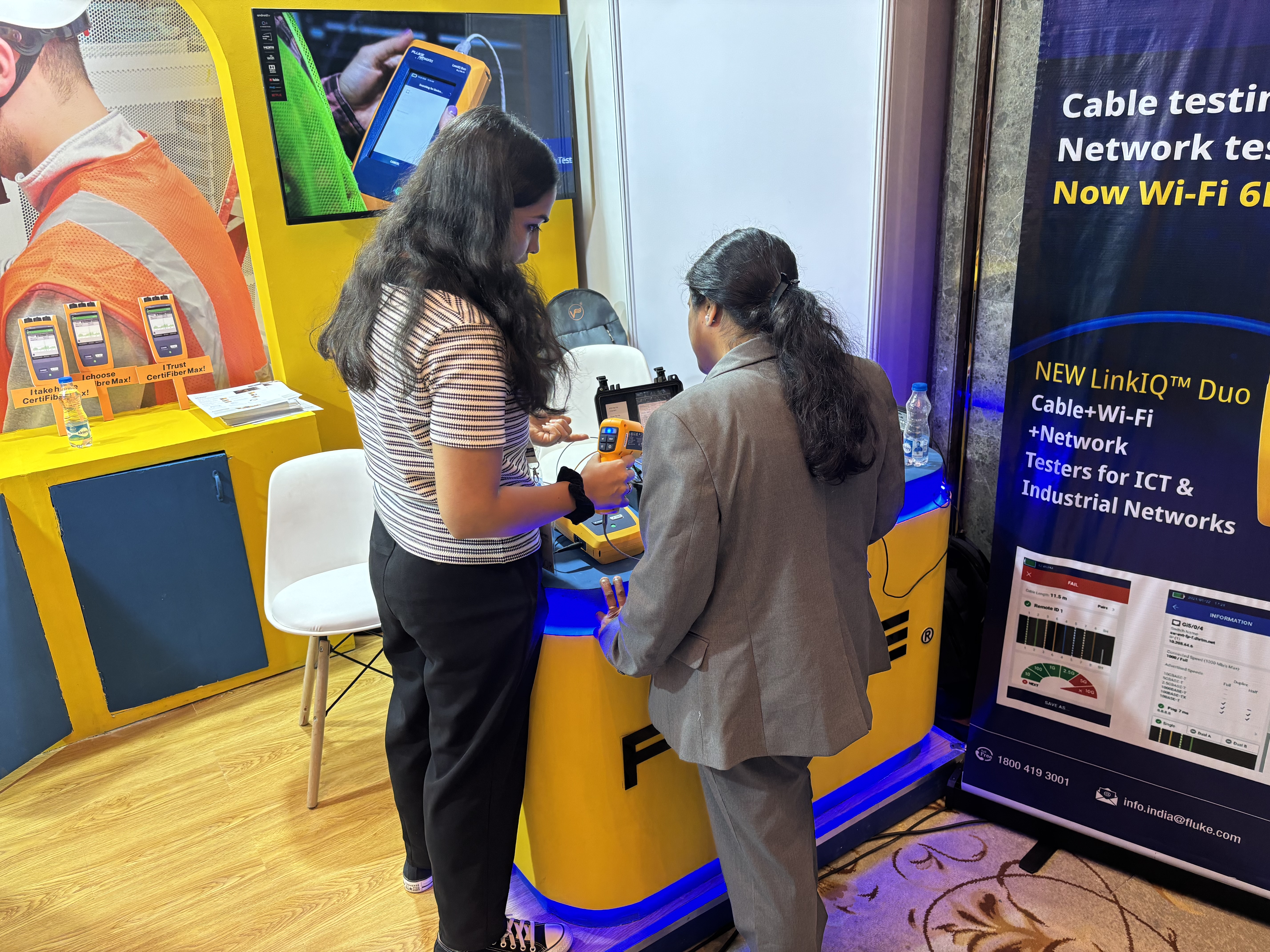
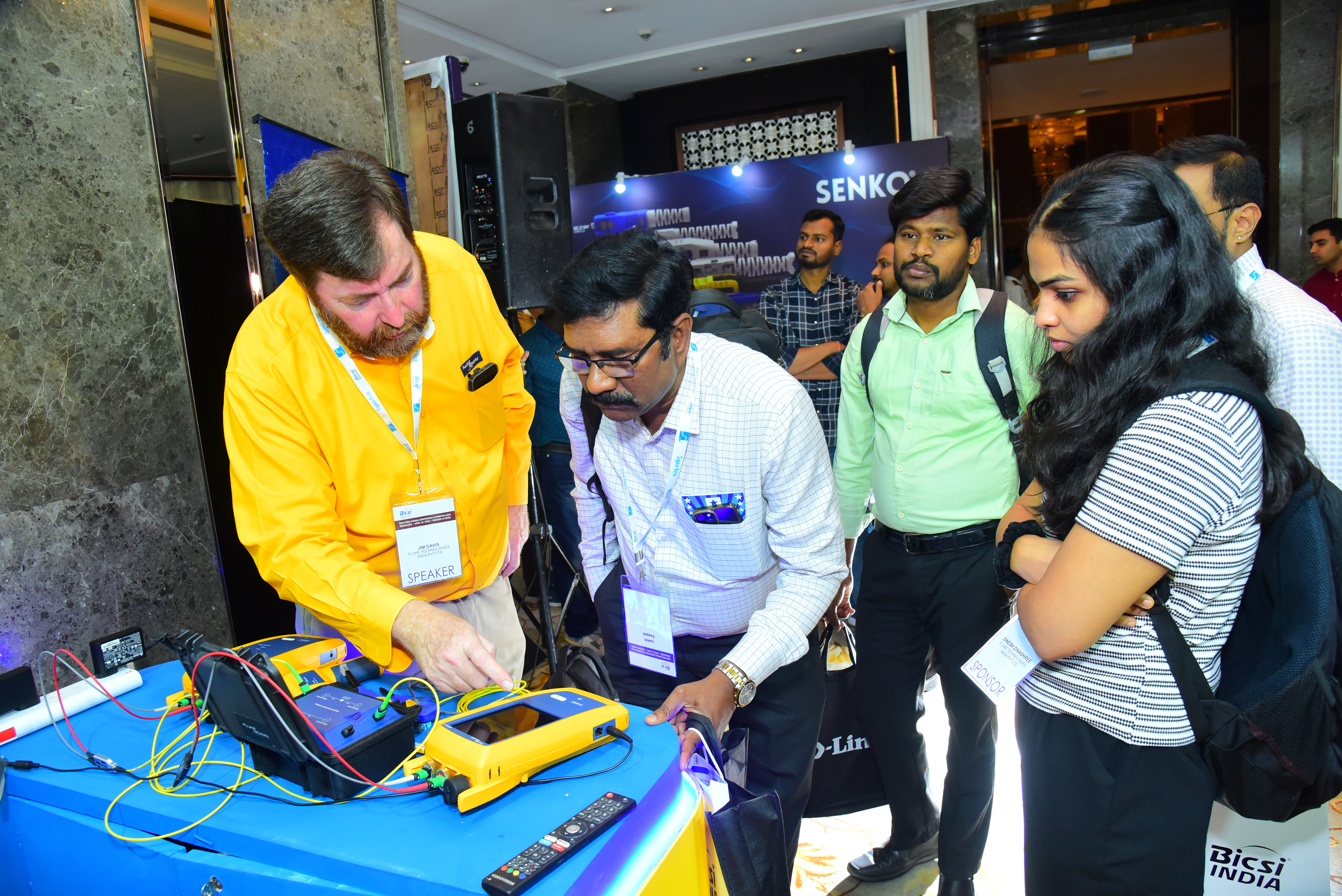
I attended the BICSI India Annual Conference & Exhibition 2026 in Bengaluru, where Fluke showcased the working CertiFiber Max device to customers and industry professionals.
At the booth, I observed live product conversations, walked current Versiv customers through the latest CertiFiber Max workflow, and saw how customers responded to the device in a real sales and demo environment. This helped connect the screen decisions I worked on to actual customer questions, field expectations, and product interest.
Process
Owned the UX direction for fitting a new high-density testing module into the existing Versiv screen system.
Mapped product requirements, hardware constraints, firmware behavior, and technician workflows to define the screen experience.
Identified where the new module could improve speed and clarity without disrupting familiar field workflows.
Translated complex fiber testing states into screens that were easier to scan, review, and act on.
Outcome
CertiFiber Max launched as a third-generation optical loss test set for high-density data center environments.
My work shaped the device-screen experience across setup, Set Reference, testing, and result review.
The final workflow helped technicians review dense 24-fiber results faster and identify failed results with less effort.
The design preserved the familiarity of the existing Versiv platform while making the new module feel clearer and more efficient.
Reflection
This project taught me that hardware UX is often about designing within constraints, not around them.
I learned how small screen decisions can have a big impact when technicians are working under time pressure in the field.
The challenge was not to introduce a completely new interaction model, but to make a complex new module feel familiar, fast, and trustworthy.
My biggest takeaway was learning how to balance user clarity, product requirements, and firmware feasibility in one shared workflow.